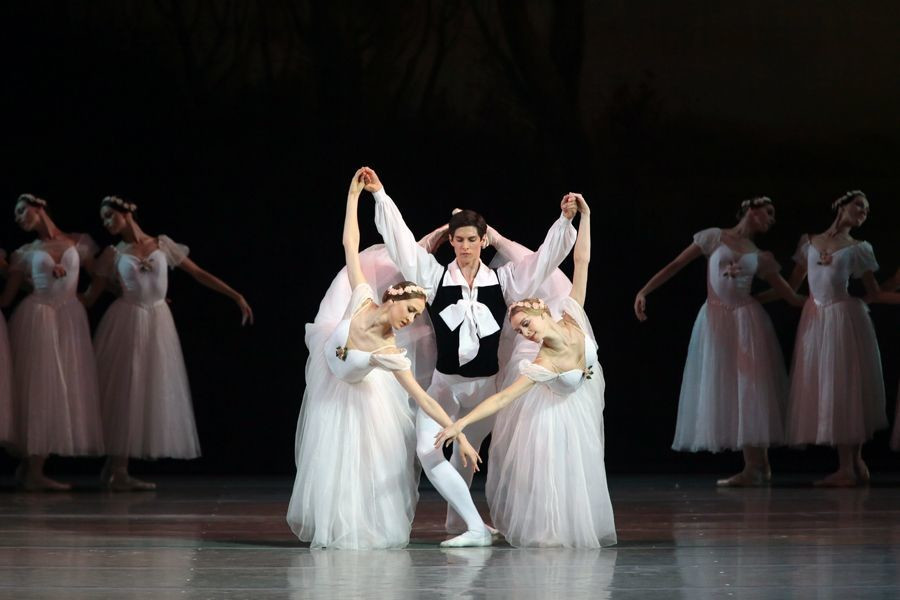
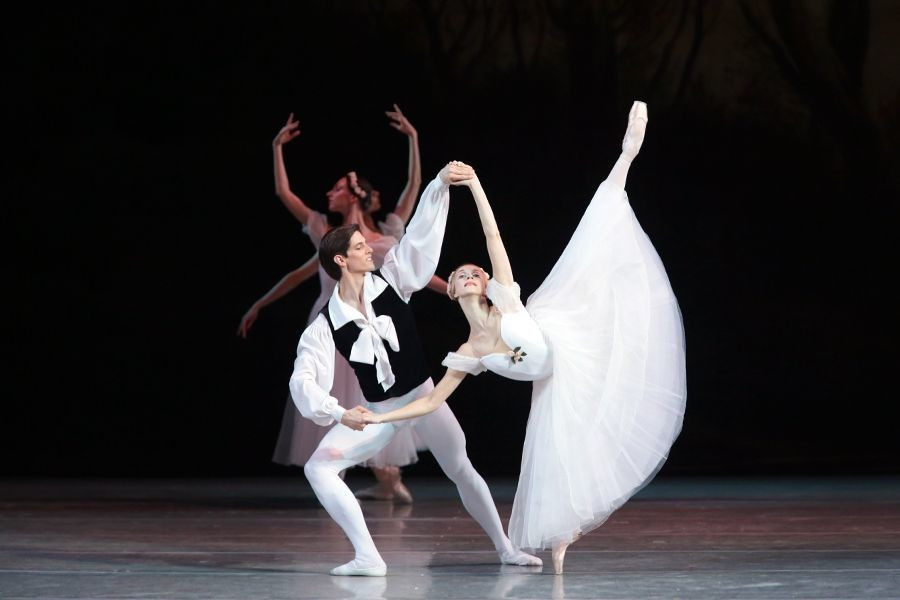
choreographic composition in one act Music: Frederic Chopin (suite of piano pieces orchestrated: Alexander Glazunov and Maurice Keller) Choreography: Michel Fokine (1908) Scenario: Michel Fokine Revised version: Agrippina Vaganova (1931) Set design based on original sketches: Orest Allegri
World premiere: 8 March 1908, Mariinsky Theatre, St Petersburg
Running time: 35 minutes
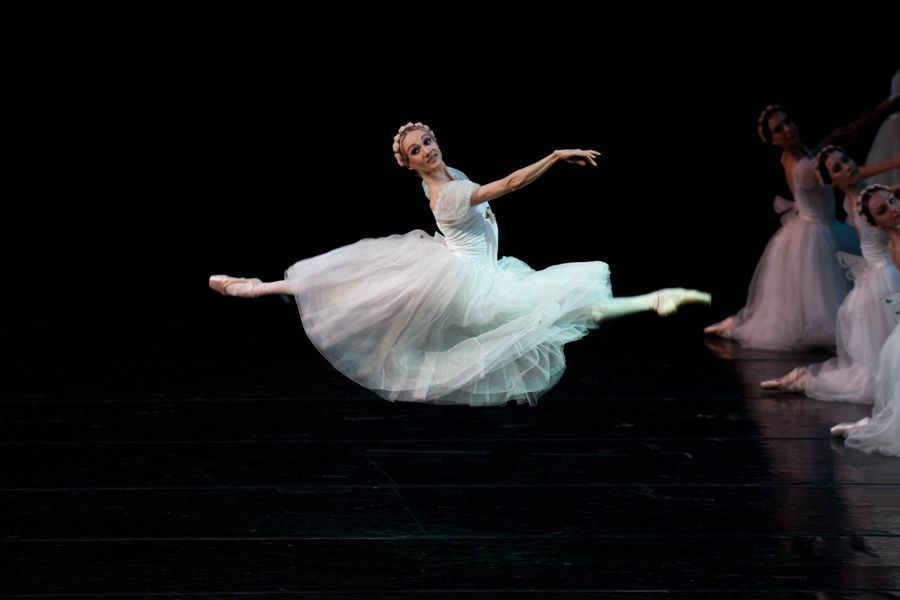
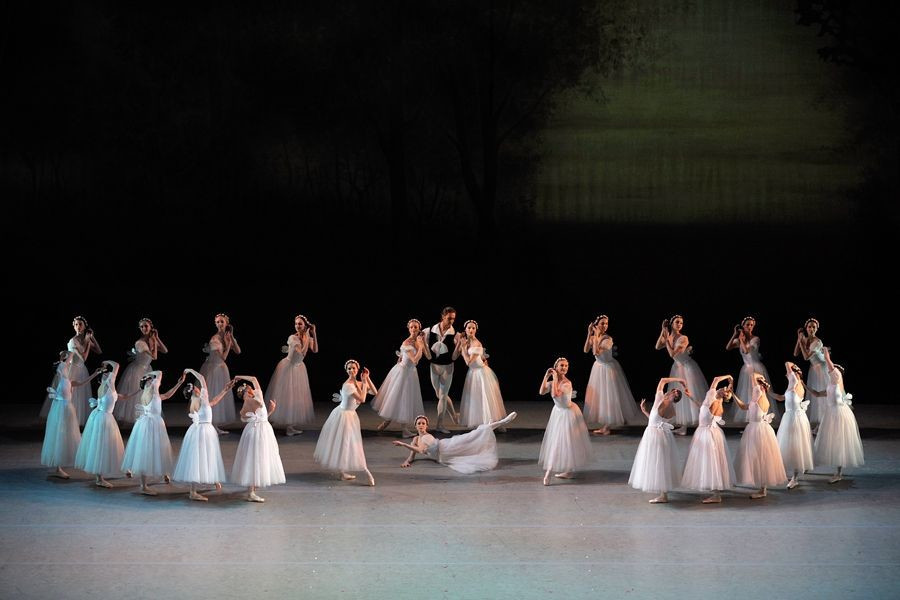
Fokine’s Chopiniana is an homage to the Romantic era with its white ballet, fleeting arabesques, airy dances of ethereal sylphides and perpetual longing for perfection. Fokine, inspired by antique engravings depicting the legendary Marie Taglioni and her contemporaries and weary of ballet virtuosity and technique show offs, created a storyless ballet sketch at the beginning of the 20th century. The sketch was “in the style of that long-forgotten time when ballet was governed by poetry, when a dancer rose en pointe not to demonstrate the steel-like arch of her foot but in order to create the impression of lightness, barely touching the ground, something ethereal and fantastical.” The choreographer wrote: “I have tried not to surprise people with the newness, but rather to restore conventional ballet dancing to the point of its greatest advances. I don’t know if this is how our ballet predecessors danced. And no-one else knows that. But in my dreams this is precisely how they did dance.”
Le Jeune homme et la mort
Credits
To music by Johann Sebastian Bach (Passacaglia in С Minor, BWV 582, arranged for full orchestra by Alexander Goedicke) Libretto by Jean Cocteau Choreography by Roland Petit
Production Choreographer: Luigi Bonino Lighting Designer: Jean-Michel Désiré Set Designer: Georges Wakhevitch Costume Designer: Karinska
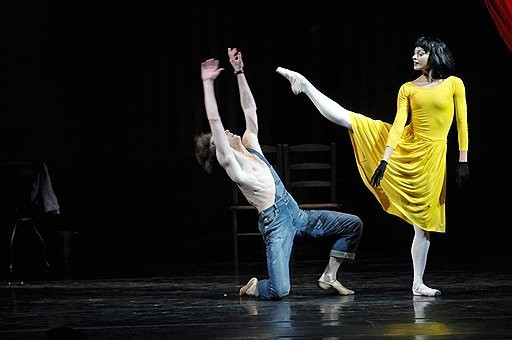
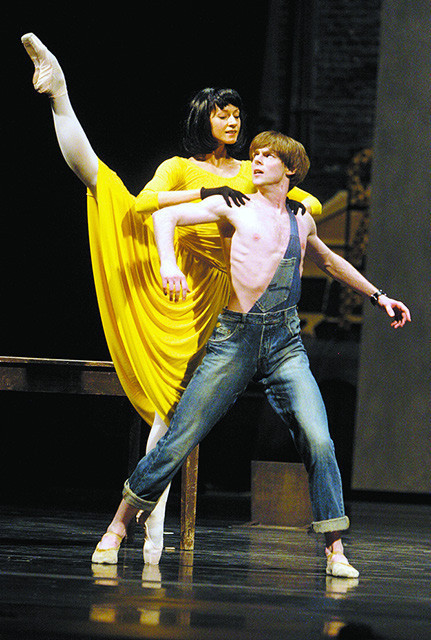
The ballet Le Jeune homme et la mort, staged in 1946 in Paris, reflected the spirit of the post-war era and became one of the most well-known works of choreographer Roland Petit and one of the most sought-after ballets by dancers of different generations. Roland Petit initially created the dancing routines for a mini-production to a popular jazz song, but just before the premiere Jean Cocteau, mastermind and source of inspiration for the ballet, suggested changing the music to Bach’s Passacaglia. There was no talk of matching the movements to musical focal points; during the first performance the creators were afraid that the Passacaglia would not be long enough for the choreography. However, thanks to Bach’s music, the theme of an artist’s conversation with death, which is raised in the ballet, has acquired dimension and scope. Drama about the meeting of a restless artist with a fatal beauty was protected from melodrama. Bach’s Passacaglia helped the performers to get away from realism: from the specifics of the things scattered in the artist's room to the state of chaos required by Cocteau, from the youth's single-valued glance at the clock to the sense of timelessness. The nerve of the meeting shown at the scene was familiar to post-war Europe, then almost everyone in the auditorium could subscribe to Jean Cocteau's words: "I have experienced such painful periods that death seemed a temptation. I'm used to not being afraid of her and looking straight into her face". Olga Makarova
Dance Scenes
Premiere: 8 April 2025, Mariinsky II
Running time: 30 minutes
Age category 12+ Credits Music by Igor Stravinsky
Musical Director: Valery Gergiev Choreographer: Vyacheslav Samodurov Set Designer: Alexey Kondratyev Costume Designer: Irena Belousova Lighting Designer: Konstantin Binkin Video Designer: Igor Domashkevich
“Infinite, translucent drapes break the stage space into several planes. These are the layers of our memory, through which we try to glimpse the life that has passed. It should feel frightening, tragic and tender all at once – full of contrast, just like life itself and just like this astonishing music,” says stage designer Alexey Kondratyev of his work on the ballet set to Stravinsky’s Symphony in C. Choreographer Vyacheslav Samodurov envisioned this symphony as a series of distinct dance scenes. Known for both narrative and abstract ballets, Samodurov refrains from outlining a storyline for his new work, though he emphasises that for him, dance always conveys emotion – it cannot exist without it. “The music of the symphony is sharp, pointed – at times even exaggeratedly so – and intricately constructed. I find that fascinating,” the choreographer remarks.